

Incorporate Your Non-Profit Organization in Canada
Build your mission on a solid legal foundation. Incorporating your non-profit organization in Canada gives your organization a separate legal identity, protects your members and directors from personal liability, and establishes the credibility and structure needed to attract funding, apply for charitable status, and enter into contracts on behalf of your cause. Incorp Master Canada provides fast and fully compliant non-profit incorporation services across all major Canadian provinces – 100% online.
Lowest Price Guarantee – No Delays – 100% Compliance

Trusted by 500+ Entrepreneurs
Just 4 Steps to Incorporate Your Non-Profit Organization
Fast, Simple & Hassle – Free Process
01
Choose Your Jurisdiction
Select the province where your non-profit organization will primarily operate. Each province has its own legislation governing non-profit incorporation.
02
Submit Your Details
Provide your organization's proposed name, the names and addresses of your founding directors, your registered office address, and your organization's purpose and activities.
03
We File Your Incorporation
Incorp Master Canada prepares and files your non-profit incorporation documents with the relevant provincial government authority on your behalf.
04
Get Your Corporation Documents
Receive your Certificate of Incorporation, Articles of Incorporation, and all corporate documents quickly by email - ready for your first board meeting..
Choose Your Province and Incorporate Your Non-Profit Organization
Non-profit incorporation requirements vary by province. Select your province to understand the legislation and process that applies to your organization.
Ontario Non-Profit
Ontario Non-Profit incorporation is governed under the Ontario Not-for-Profit Corporations Act, 2010 (ONCA), which came into force on October 19, 2021, replacing the previous Corporations Act framework. ONCA provides Ontario non-profit corporations with a modern legal framework similar to that available to for-profit corporations under the Ontario Business Corporations Act. A minimum of three directors is required to incorporate an Ontario non-profit. There is no Canadian residency requirement for directors under ONCA. Ontario non-profits are classified as either public benefit corporations – those that receive more than $10,000 in income from public sources including government grants and public donations in a financial year – or non-public benefit corporations, with different reporting and audit requirements applying to each category. Incorporation is completed through the Ontario Business Registry.
Alberta Non-Profit
Alberta Non-Profit incorporation is governed under the Alberta Societies Act for membership-based non-profit societies and the Companies Act for non-profit companies without share capital. The Alberta Societies Act is the most common legislation used for incorporating non-profit organizations and community groups in Alberta. A minimum of five members is required to form a society under the Alberta Societies Act. Alberta non-profits must have bylaws that comply with the Societies Act, setting out the organization’s purposes, membership rules, board structure, and meeting procedures. Incorporation gives the organization a separate legal identity, limited liability for its members, and the ability to hold property and enter into contracts in its own name.
BC Society
British Columbia non-profit incorporation is governed under the BC Societies Act, which replaced the former Society Act effective November 28, 2016, administered by BC Registry Services. In British Columbia, non-profit organizations are incorporated as societies rather than corporations. A minimum of five members is required to incorporate a BC Society. BC Societies must file a Constitution and Bylaws along with their incorporation application through BC Registry Services. The BC Societies Act introduced a modern online filing system and requires societies to file an annual report each year to maintain good standing. Directors of a BC Society must be at least 18 years of age and at least one member of the board must be ordinarily resident in British Columbia. BC Registry Services administers all society incorporations, amendments, and dissolutions in the province.
Quebec Non-Profit
Quebec Non-Profit incorporation is governed under Part III of the Quebec Companies Act (Loi sur les compagnies, RLRQ c C-38), which provides for the incorporation of non-profit organizations without share capital in Quebec. Quebec non-profits are incorporated through the Registraire des entreprises du Québec (REQ) and must comply with Quebec’s Civil Code and the Companies Act. A minimum of three directors is required, and the non-profit must draft letters patent setting out its name, objects, and governing rules. Unlike common law provinces, Quebec non-profits operate under a civil law framework, which governs their formation, governance, and dissolution differently from other Canadian provinces. Quebec non-profits that intend to solicit public donations or apply for charitable status must also comply with additional Quebec regulatory requirements.
Manitoba Non-Profit
Manitoba Non-Profit incorporation is governed under the Corporations Act of Manitoba for non-share capital corporations. Manitoba non-profits are incorporated through the Companies Office of Entrepreneurship Manitoba. A minimum of three directors is required, and at least 25% of the directors must be Canadian residents under the Manitoba Corporations Act. The organization must file Articles of Incorporation setting out its name, registered office, purpose, and the names of its founding directors. Manitoba non-profits must also adopt bylaws that comply with the Corporations Act and govern the day-to-day management of the organization. Manitoba is home to a growing non-profit sector, particularly in community services, arts and culture, healthcare, and social services.
New Brunswick Non-Profit
New Brunswick Non-Profit incorporation is governed under the Companies Act of New Brunswick for non-profit organizations without share capital, administered by the Corporate Affairs Branch of Service New Brunswick. A minimum of three directors is required to incorporate a New Brunswick non-profit. The organization must submit Memorandum of Association and Articles of Association setting out the organization’s name, objects, and membership rules. New Brunswick non-profits must have a registered office address within the province and must file annual returns with Service New Brunswick to maintain good standing. New Brunswick’s non-profit sector includes a wide range of organizations in community services, culture, sports, and social development across the province’s bilingual communities.
How Long Does It Take to Incorporate a Non-Profit Organization in Canada?

Standard
Regular Queue: Incorporated in 20 Business Days

Priority
Priority Queue: Incorporated in 10 Business Day +$ 99.00 CAD

Rush
Express Queue: Incorporated in 3 Business Days +$ 199.00 CAD

What Incorporation Means for Your Non-Profit Organization
Build Your Mission on a Legally Recognized Foundation
Incorporating your non-profit organization in Canada is the most important step you can take to protect your directors, members, and assets while building a credible and sustainable organization. An incorporated non-profit has a separate legal identity from its members and directors – meaning it can own property, enter contracts, receive grants and donations, open bank accounts, and pursue its mission without exposing individual members to personal liability.
Incorp Master Canada provides fast and seamless non-profit incorporation services across Ontario, Alberta, British Columbia, Quebec, Manitoba, and New Brunswick – 100% online.
Why Incorporate Your Non-Profit Organization in Canada?
- Separate legal identity - the organization exists independently from its members and directors
- Limited liability protection for directors and members
- Required to apply for federal charitable status with the Canada Revenue Agency
- Eligible to receive government grants, foundation funding, and corporate donations
- Ability to own property, sign contracts, and open bank accounts in the organization's name
- Increased credibility with donors, government agencies, and partner organizations
Incorporate your non-profit organization with Incorp Master Canada today and build the legal foundation your mission deserves.
Incorporate your non-profit organization today and start making a difference with full legal standing.




Why Choose Incorp Master Canada for Non-Profit Incorporation?
Helping Canadian Non-Profits Build Their Legal Foundation
Incorporate your non-profit organization with confidence through Incorp Master Canada’s fast, accurate, and fully compliant provincial non-profit incorporation services. Every non-profit incorporation is prepared and filed through the official government registry of the relevant province, and your Certificate of Incorporation is delivered directly to your email.
Incorp Master Canada provides fast, secure, and compliant non-profit organization incorporation services for charities, societies, associations, and community organizations across Canada.


Fast & Affordable Non-Profit Incorporation for Canadian Organizations!
Incorp Master Canada makes non-profit incorporation quick, affordable, and stress-free for community organizations, charities, societies, and associations across Canada.
What Customers Say
Customer satisfaction is our top priority. We strive to ensure a seamless and efficient business setup process. Explore our customer’s experiences with us
Trustindex verifies that the original source of the review is Google. The process was very straight forward. The menu of services was clear and easy to follow. Preet ensured communication was consistent and he had my file processed quickly.Posted on GoogleTrustindex verifies that the original source of the review is Google. I just wanted everyone to know I had a great experience incorporating my Business. My agent Ashleigh was great in keeping me updated with the process and even after all was completed on time as promised, she let me know they were available to assist if required for any post registration issues. I highly recommend.Posted on GoogleTrustindex verifies that the original source of the review is Google. Peter was great! Fast and efficient. All done from phone call to completion in 2 days. Thank you PeterPosted on GoogleTrustindex verifies that the original source of the review is Google. Thanks PreetPosted on GoogleTrustindex verifies that the original source of the review is Google. Excellent customer service. Thank You Angela for your help. I found it very efficient and friendly. LTJBPosted on GoogleTrustindex verifies that the original source of the review is Google. Larry at IncorpMaster was great to deal with. There was a minor discrepancy in the information we provided when registering the business name, but it was quickly resolved, and the final papers arrived in my inbox within minutes. Highly recommend this company for ease of transaction and polite agents.Posted on GoogleTrustindex verifies that the original source of the review is Google. Good service.. thanks.. BRIANNA 👍Posted on GoogleTrustindex verifies that the original source of the review is Google. Fantastic experience with IncorpMaster Canada. Angela handled my business incorporation and made the entire process simple and stress-free. I chose the 1-day option and it was completed on time. Everything went smoothly from start to finish. Highly recommend.Posted on GoogleTrustindex verifies that the original source of the review is Google. I recently had the pleasure of working with this company, and I couldn't be happier with the service I received. They were diligent about meeting deadlines and kept me in the loop throughout the entire process. A special shout-out to Mr. Shoukat for his exceptional help in registering our ministries – it was a seamless and stress-free experience.
Frequently Asked Questions
Find out why IncorpMaster leads the way in our industry. Check out
our FAQs to see why weʼre your top choice for all your needs.
A non-profit organization in Canada is a legal entity that is incorporated for purposes other than financial gain. Non-profit organizations are formed to pursue social, charitable, cultural, recreational, educational, religious, or community objectives, and any surplus revenue generated must be used to further the organization's stated purposes rather than distributed to its members or directors. In Canada, non-profit organizations can be incorporated provincially under the relevant provincial legislation or federally under the Canada Not-for-Profit Corporations Act (CNCA). Incorporated non-profits have a separate legal identity from their members and directors, providing limited liability protection and enabling the organization to own property, sign contracts, and pursue its mission with full legal standing.
A non-profit organization and a charity are not the same thing in Canada, though charities are a subset of non-profit organizations. All charities are non-profits, but not all non-profits are charities. A non-profit organization is incorporated for purposes other than profit and does not distribute its surplus to members. A registered charity, by contrast, must be registered with the Canada Revenue Agency (CRA) and must meet the CRA's strict definition of charitable purposes - which includes the relief of poverty, advancement of education, advancement of religion, or other purposes beneficial to the community. Registered charities have the added benefit of being able to issue official tax receipts for donations, which allows donors to claim a tax credit on their personal income tax return. Non-profits that are not registered charities cannot issue tax receipts.
The minimum number of directors required to incorporate a non-profit organization in Canada varies by province. In Ontario, a minimum of three directors is required under the Ontario Not-for-Profit Corporations Act (ONCA). In Alberta, a minimum of five members is required to form a society under the Alberta Societies Act. In British Columbia, a minimum of five members is required under the BC Societies Act. In Quebec, a minimum of three directors is required under Part III of the Quebec Companies Act. In Manitoba, a minimum of three directors is required under the Corporations Act of Manitoba, with at least 25% being Canadian residents. In New Brunswick, a minimum of three directors is required under the Companies Act of New Brunswick. Federally, a minimum of one director is required under the Canada Not-for-Profit Corporations Act, though in practice most organizations have three or more.
Yes, bylaws are a required component of incorporating a non-profit organization in most Canadian provinces. Bylaws set out the internal rules of the organization including membership eligibility, member rights and responsibilities, meeting procedures, voting rules, board of director composition, officer roles, and conflict of interest policies. In Ontario, ONCA provides a standard organizational bylaw that applies automatically to a newly incorporated non-profit that does not pass its own organizational bylaw within 60 days of incorporation. In British Columbia, a Constitution and Bylaws must be filed as part of the incorporation application. In Alberta, bylaws must comply with the Societies Act. Incorp Master Canada can guide you through the bylaw and documentation process to ensure your non-profit is properly and fully incorporated.
The key difference between provincial and federal non-profit incorporation in Canada is the geographic scope of the organization's operations. A provincially incorporated non-profit is subject to the legislation of the province in which it is incorporated and is best suited for organizations that operate primarily within a single province. A federally incorporated non-profit under the Canada Not-for-Profit Corporations Act can operate in any province or territory across Canada under a single incorporation. Federal incorporation provides stronger name protection across Canada and is often preferred by national organizations, umbrella associations, and non-profits with a pan-Canadian mandate. However, federally incorporated non-profits must still register extra-provincially in each province where they carry on activities. Incorp Master Canada handles both provincial and federal non-profit incorporations.
Yes, a non-profit organization in Canada can generate revenue and operating surpluses - but it cannot distribute those surpluses to its members or directors. A non-profit can charge membership fees, sell goods or services, receive donations, apply for grants, and conduct fundraising activities, and any surplus revenue must be reinvested into the organization's stated purposes. This is the fundamental distinction between a non-profit and a for-profit business. If a non-profit organization distributes its surplus to members in a manner similar to dividends, it risks losing its non-profit status and may face legal and tax consequences. Non-profit organizations that intend to issue tax receipts for donations must also apply for registered charity status with the Canada Revenue Agency separately from their incorporation.
The cost of incorporating a non-profit organization in Canada varies by province. Government incorporation fees typically range from $50 to $350 depending on the province. In Ontario, the government fee for incorporating a non-profit under ONCA is $155 through the Ontario Business Registry. In British Columbia, the government fee for incorporating a society under the BC Societies Act is approximately $60 online through BC Registry Services, subject to change. In Alberta, the fee for incorporating under the Alberta Societies Act varies. In Quebec, fees apply through the Registraire des entreprises du Québec. In addition to government fees, professional service fees apply when using a filing service such as Incorp Master Canada to prepare and file your incorporation documents. Incorp Master Canada offers transparent, upfront pricing with no hidden fees across all provinces.
- Yes, an incorporated non-profit organization in Canada can own property in its own name. This is one of the key benefits of incorporation - the organization has a separate legal identity from its members and directors, allowing it to own real estate, equipment, vehicles, intellectual property, and other assets independently. Unincorporated associations, by contrast, cannot own property in the association's name - property must be held by individual members or trustees on behalf of the organization, which creates legal and practical complications. Incorporated non-profits can also open bank accounts, apply for loans, enter into leases, and sign contracts entirely in the organization's name without requiring individual members to take on personal liability for these obligations.
No, incorporating a non-profit organization does not automatically grant it registered charitable status in Canada. Incorporation and charitable registration are two separate processes governed by different legislation. Incorporation creates a legal entity under the relevant provincial or federal corporations legislation. Charitable registration is granted by the Canada Revenue Agency (CRA) under the Income Tax Act and requires the organization to demonstrate that its purposes qualify as charitable under Canadian law - including the relief of poverty, advancement of education, advancement of religion, or other purposes beneficial to the community. After incorporation, a non-profit that wishes to become a registered charity must submit a separate application to the CRA. Incorp Master Canada handles the non-profit incorporation process - for charitable registration guidance, we recommend consulting a charity law professional.
Yes, a non-profit organization in Canada can be voluntarily dissolved by its members or directors, or involuntarily dissolved by the relevant government registry for failure to comply with its corporate obligations such as annual return filings. The voluntary dissolution process varies by province but generally requires a resolution by the members or directors, settlement of all outstanding debts and obligations, distribution of remaining assets to another qualified non-profit or charitable organization in accordance with the organization's bylaws and applicable legislation, and filing of dissolution documents with the relevant provincial or federal registry. In most provinces, non-profit organizations are prohibited from distributing remaining assets to their members upon dissolution - assets must be transferred to another non-profit or charitable organization with similar purposes.
Helpful Guides for Entrepreneurs in Canada
Select the right structure for your business, learn the difference between incorporated and unincorporated business, standard and professional corporation. Check our blog for useful business tips, it’s your go-to resource for informed decisions.
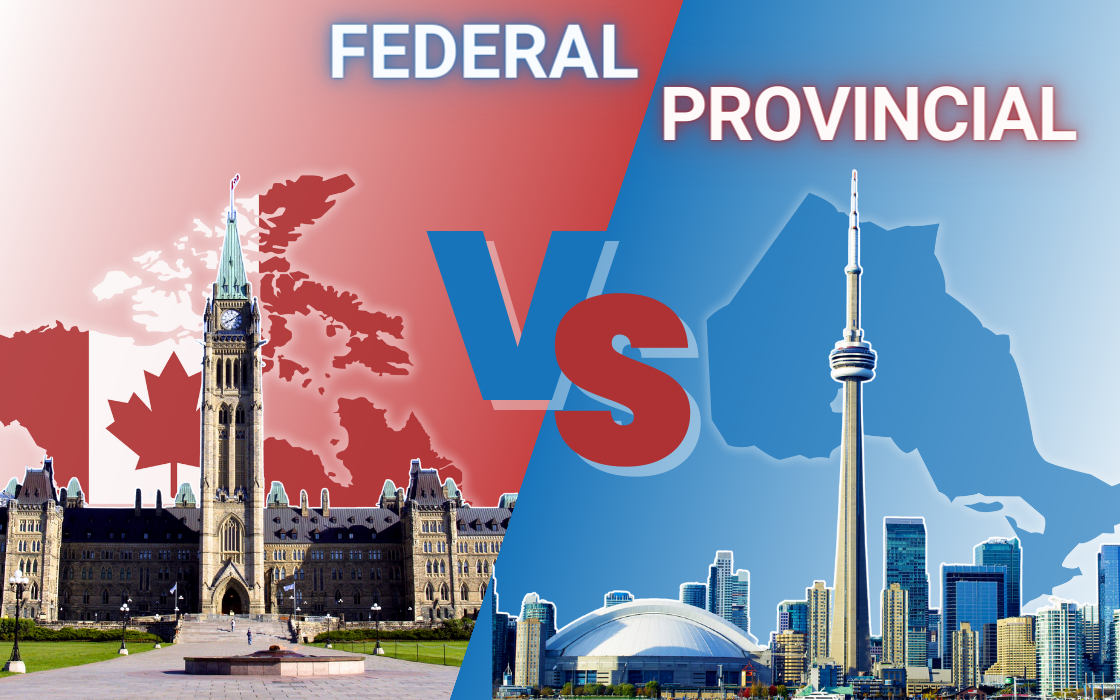
Federal or Provincial Incorporation
As a corporate registry agency, we receive a numerous number of calls every

Incorporated vs. Unincorporated Businesses
When you are starting a new business the first question you will face

Professional vs Standard Corporation
Lorem ipsum dolor sit amet, consectetur adipisicing elit, sed do eiusmod tempor ut